

What is a good password manager? Bitwarden, 1Password, Keeper, and MindYourPass compared


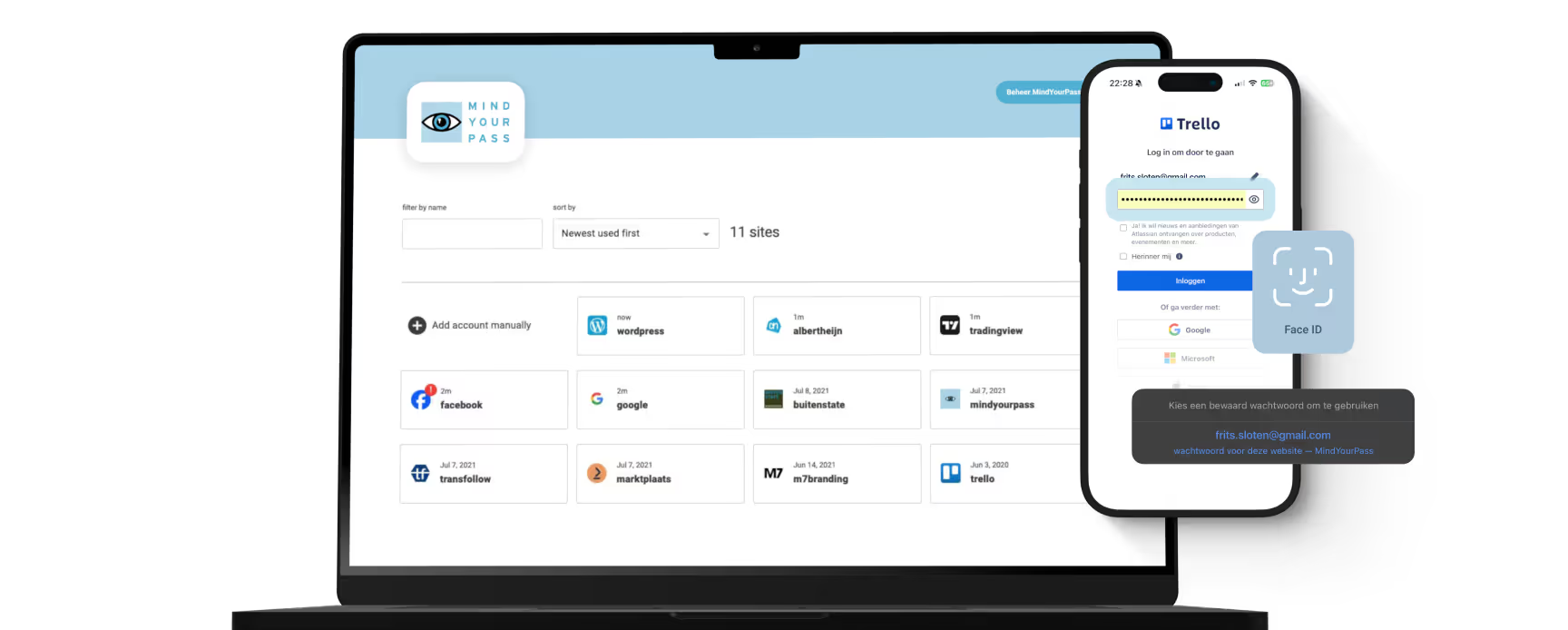
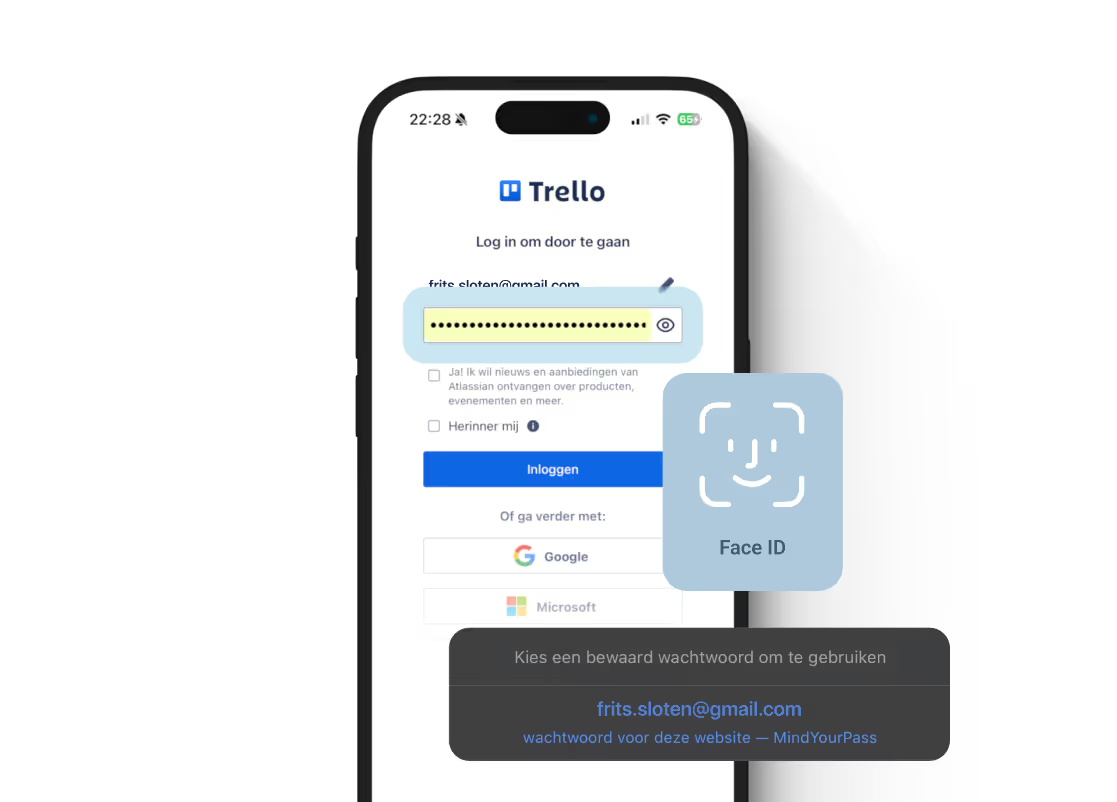

In this article, we compare four solutions: Bitwarden, 1Password, Keeper, and MindYourPass. The first three are familiar names; the last one is a new Dutch solution. All these tools have been developed to make password use safer and easier, but practice shows that only about 5% of employees actually use one.
MindYourPass addresses that problem at its core by actively encouraging and enforcing the use of secure passwords (more about this later). But what exactly do password managers do — and why are they so rarely used?
What do password managers do?
Many organizations are now realizing that passwords are often the Achilles heel of their security. From Verizon's Data Breach Investigations Report It appears that 88% of basic web application attacks play a role in weak, stolen or reused passwords. Abuse of login details thus remains the most common way from attackers to enter systems.
Most password managers try to solve that problem with a classic model: they act as a digital vault where users can store their passwords centrally. In this way, they can be stored securely and filled in automatically on websites.
In addition to storing passwords, many password managers offer additional features, such as syncing between devices, shared vaults for teams, and storing other sensitive information such as credit cards or identity documents. Some also check for weak or leaked passwords and provide recommendations for improvement.
Those features are valuable, but only if they're actually used. Out of us own research it appears that only 5% of employees use a password manager consistently. In practice, human behavior is thus the weakest link. Passwords are still stored locally, reused, or used outside of policy.
So a good password manager isn't just about securely storing login details, but primarily about how the tool is used in practice. The real risk often lies not in technology, but in the fact that users do not use or work around the tool consistently. Without insight into usage, it is difficult to enforce or adjust policies. That is why, with MindYourPass's password manager 2.0 solution, the role of technology is shifting: to support behavior and to technically enforce it.
Bitwarden, 1Password, Keeper, and MindYourPass compared
There are many password managers available, but they differ in their features and approaches. To provide insight into what each platform offers, we've listed the key features and capabilities of Bitwarden, 1Password, Keeper, and MindYourPass side by side.
MindYourPass: what it does and what it doesn't
As the table above shows, MindYourPass consciously takes a different approach than traditional password managers. While many tools focus on storing and managing credentials, MindYourPass focuses on behavior, compliance, and insight. To properly understand what this approach entails, it is important to be clear about what MindYourPass does not do - and what makes it possible.
What MindYourPass does do:
- Focus on the biggest risk: weak passwordsMindYourPass focuses on fixing vulnerable, reused, or weak passwords - the cause of the majority of data breaches. We deliberately choose not to add additional features or storage of non-password data. What we don't have can't be closed either.
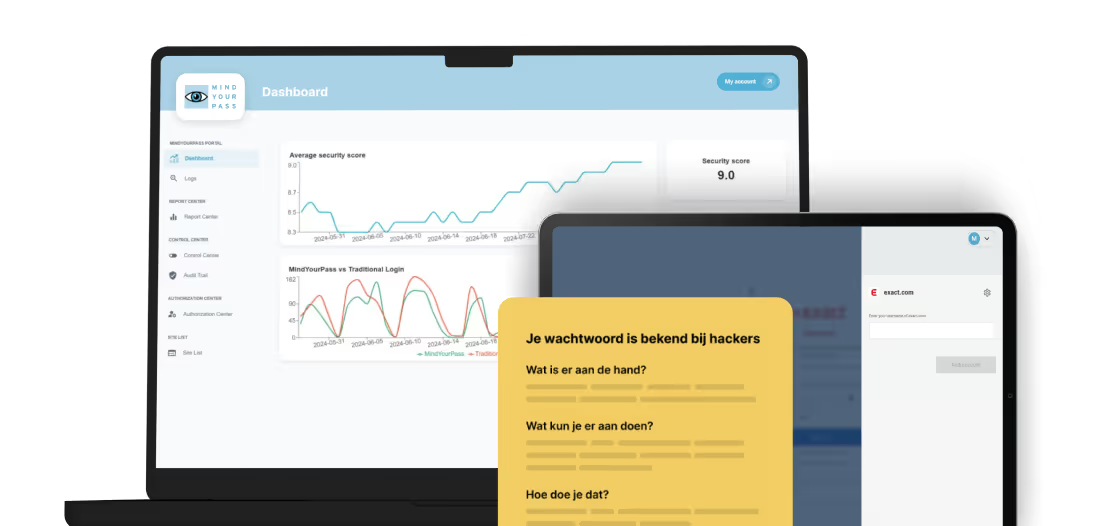
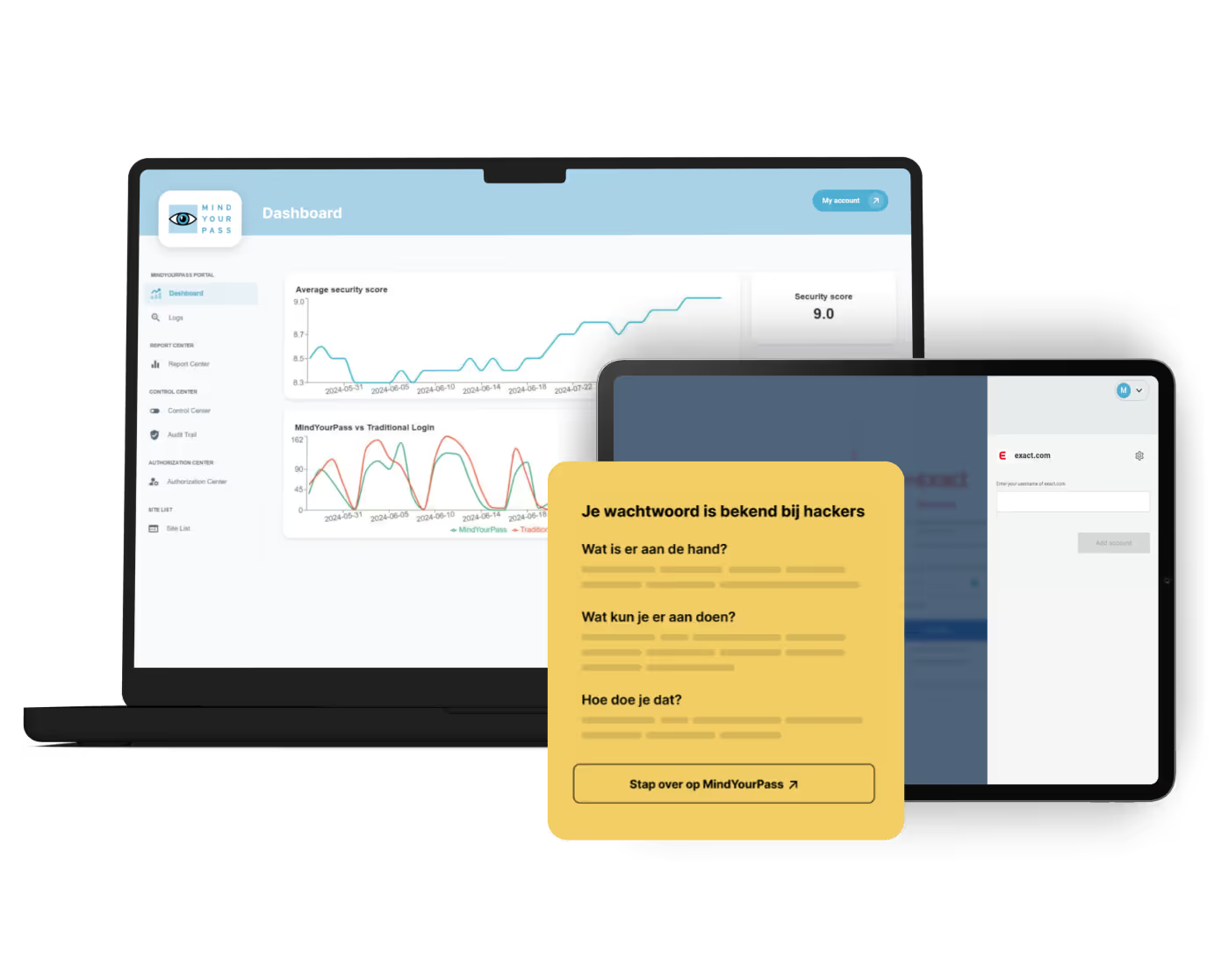
- Measuring behavior and providing insightMindYourPass anonymously records which online applications are logged in to, how strong the passwords are and whether the password manager is being used. This gives organizations concrete insight into tool adoption and compliance. Where traditional password managers only see which passwords users voluntarily save, MindYourPass shows where they actually log in - and how strong those passwords are.
- Actual enforcement of policiesOther password managers can only enforce policies within their own vault. MindYourPass goes further: organizations choose which websites require secure login, so that users can no longer work outside the policy.
- Friction-free integrationUsers don't have to save passwords themselves or make choices about when to use the tool or not. This makes safe behavior the default, not the exception.
- Focus on behavioral change within organizationsMindYourPass is designed for organizations that want control over password usage without relying on voluntary adoption or manual controls.
In addition, MindYourPass is the only Dutch solution in this list - developed and hosted within Europe.
What MindYourPass Doesn't Do
- Save passwordsMindYourPass doesn't have a password vault like other password managers. Instead, MindYourPass has developed a patented hashing-based technology to recalculate and re-enter passwords every time you log in. After that, the password disappears again. Password storage is therefore no longer necessary.
- No storage of additional data, secret management, or burner emails
- Asking for money for personal use
- No monitoring at the individual levelMindYourPass only analyses at the organizational level and never to track personal behavior or make commercial use of it.
MindYourPass deliberately does not provide storage for credit cards, files, API keys, or temporary email addresses. Instead, we're focusing on the real problem password managers were once conceived of: making sure employees actually use secure passwords - and actually using the tool.
What suits your organization or situation?
Many basic functions can now be found in all the password managers mentioned. Bitwarden, 1Password, Keeper, and MindYourPass support SSO, biometric login, and passkey management. Teams can collaborate securely and share passwords in a user-friendly way. In terms of focus, Bitwarden stands out with a strong enterprise market position, Keeper mainly focuses on IT teams with additional specialized functions, and 1Password is somewhere between the two in terms of offer and target group.
Although Bitwarden, 1Password and Keeper make it possible to set password policies, for example about length, complexity and reset frequency, in practice, it is not possible to really enforce these rules. Users can choose a weak password and decide not to store it in the vault, so the system does not know about it and the risk remains.
There are also restrictions when it comes to monitoring and insight. Traditional tools can only measure what happens inside the vault. When passwords are not stored, there is no insight into compliance or risks, so claims about insight into shadow IT always depend on what is actually in the system. In addition, these enhanced features are usually only available in more expensive enterprise plans.
MindYourPass takes a fundamentally different approach to this. By directly influencing and controlling password behavior, it prevents users from working outside the policy. Instead of just recording what happens, MindYourPass makes safe behavior the default.
Choosing a password manager depends heavily on your specific purpose and context. For individual users or small teams with the discipline to use the password manager everywhere, the choice between Bitwarden, 1Password, or Keeper makes little difference. They offer similar features for secure storage and ease of use.
For organizations that struggle with using the password manager consistently and applying strong, unique passwords to all online applications, MindYourPass offers a different approach. Instead of checking afterwards whether employees comply with the policy, MindYourPass provides direct insight into how employees actually log in and makes it possible to actively enforce that policy.
Conclusion: MindYourPass as a Dutch alternative to commonly used password managers
Password managers are an important first step in digital security, but they're not all the same. Traditional tools such as Bitwarden, 1Password, and Keeper offer extensive storage and management features, but have little control over user behavior.
MindYourPass introduces a new model: password management based on insight, behavioral change and enforceable policies, without the dependency on storage. This reinforces the security model for organizations that want to take password protection seriously.
So the question is not just which functions you need, but especially which risks you want to cover - and which ones demeanour you require from your users.

Get in touch with us.
Let MindYourPass make your organization safe.
Log in securely with ease.
At home and at work.


Triple-i™ improvement method
De kluisloze wachtwoordmanager van MindYourPass
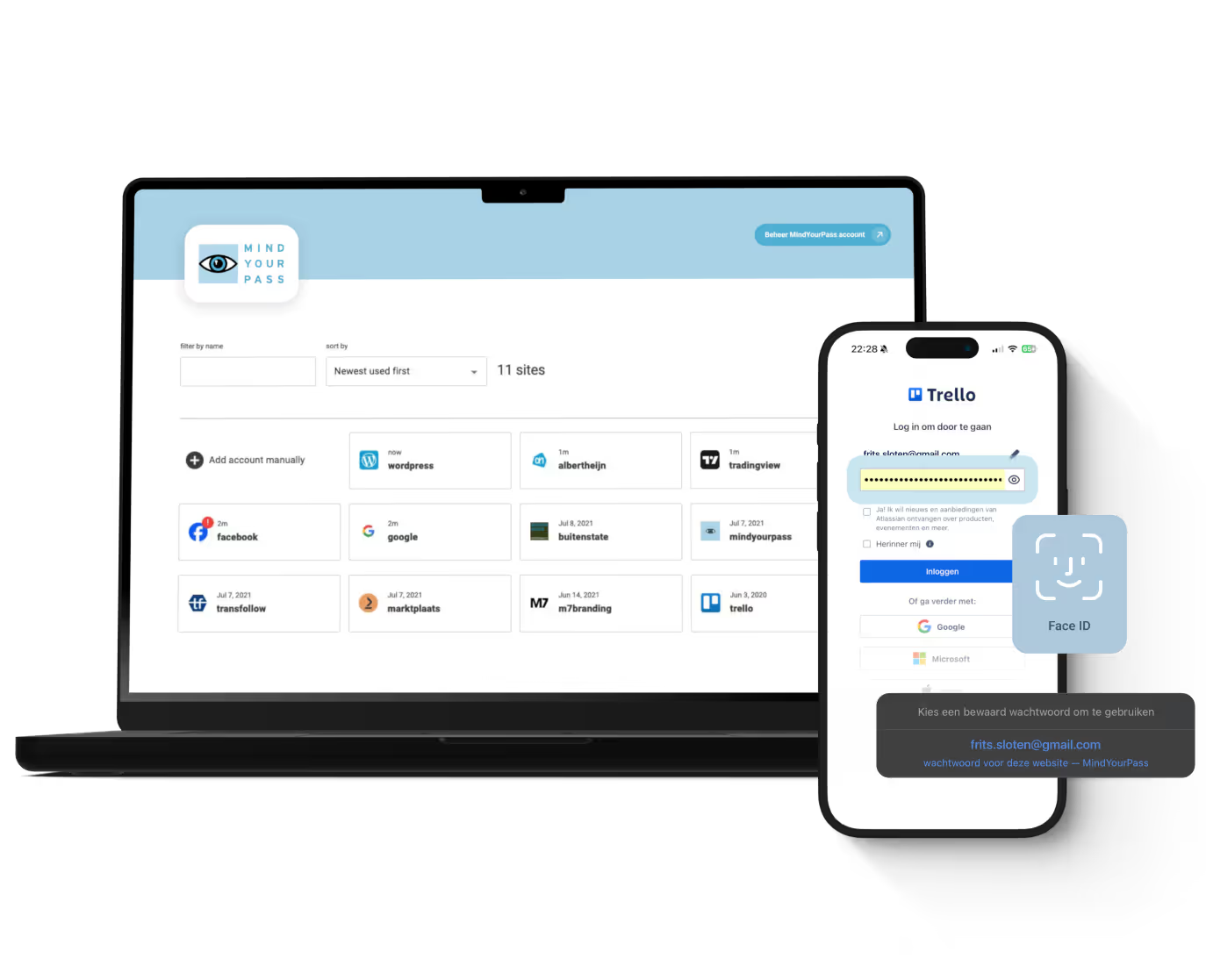
Met de wachtwoordmanager van MindYourPass maak je eenvoudig al je wachtwoorden ijzersterk en uniek. De wachtwoordmanager beheert jouw wachtwoorden, waarmee jij dagelijks kunt inloggen op al je accounts. Zonder dat jij je wachtwoorden hoeft in te typen. Dat doet MindYourPass voor je.